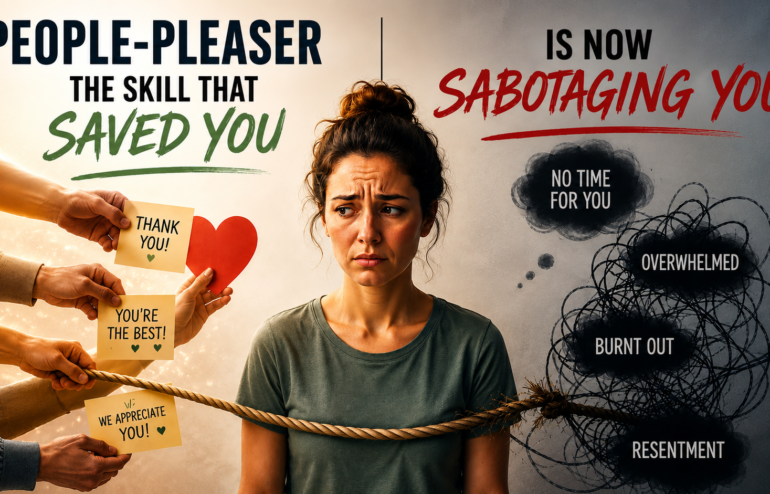
I’ve got a question. Can you say No?
Let me ask you something. Will you be honest?
The last time you said no — really said no, without apologizing three times or following it up with an explanation— how did it feel?
If the answer is terrible, you’re not alone. You’re not broken.
You’re just someone who was taught that keeping The Peace is more important than protecting your peace. That taking care of others first is a virtue. That your needs can wait.
Here’s the hard truth nobody puts on a motivational poster: Guilt after setting a boundary isn’t a sign you did something wrong. It’s a sign you did something new.
Your nervous system doesn’t know the difference between danger and discomfort. When you set a boundary for the first time — or the tenth time — with someone who isn’t used to hearing it from you, your body sounds the alarm. You’ve upset them. Fix it. Apologize. Take it back.
That alarm is lying to you.
The bully between your ears has been running that script so long it sounds like your own voice. It sounds like wisdom. It sounds like kindness. But what is it really? Fear wearing a convincing disguise.
Here’s what I know after 21 years of working with high-achieving women: the ones who feel the guiltiest about setting boundaries are often the ones who need them desperately. They’ve spent so long making themselves smaller, more agreeable, more available — that the moment they take up their rightful space, it feels selfish.
It’s not selfish. Setting boundaries is survival. And eventually, it becomes your strength.
You don’t have to be harsh to hold a boundary. You don’t have to be cold. You can be warm, direct, and firm — all at the same time. That’s not a contradiction. That’s confidence.
Confidence, real confidence, isn’t the absence of guilt. It’s the decision to move forward anyway.
Have you ever set a boundary and immediately wanted to take it back? What happened?
Hit reply and tell me your story. I’d love to hear what your thoughts and feelings are. I read every single one, and sometimes the bravest thing we can do is say it out loud to someone who gets it.
You’re not too much. You’re exactly enough.